How Diet Affects Your Teeth: Foods That Help and Foods That Harm
How Diet Affects Your Teeth, and for that, ever sat down with a bag of chips or a fizzy soda and thought, “This can’t be that bad for my teeth, right?” I used to think the same. But after a string of unexpected dental check-ups and a little too much late‑night snacking during my college days, I realized how much what we eat (and drink) really shapes the fate of our smile. In this post, I’ll walk you through what diet does to your teeth — good and bad — weaving in science, personal lessons, and some everyday wisdom (plus a nod to what experts say).
The Teeth–Diet Connection: Not Just Candy and Soda
Think of your teeth like a fortress — the outer walls are your enamel, protecting everything inside. What you eat and drink can either reinforce those walls or slowly chip them away. That means your morning orange juice, your midnight snack, even that “harmless” energy drink — all have a say in your oral health.
Why nutrition matters more than you might expect
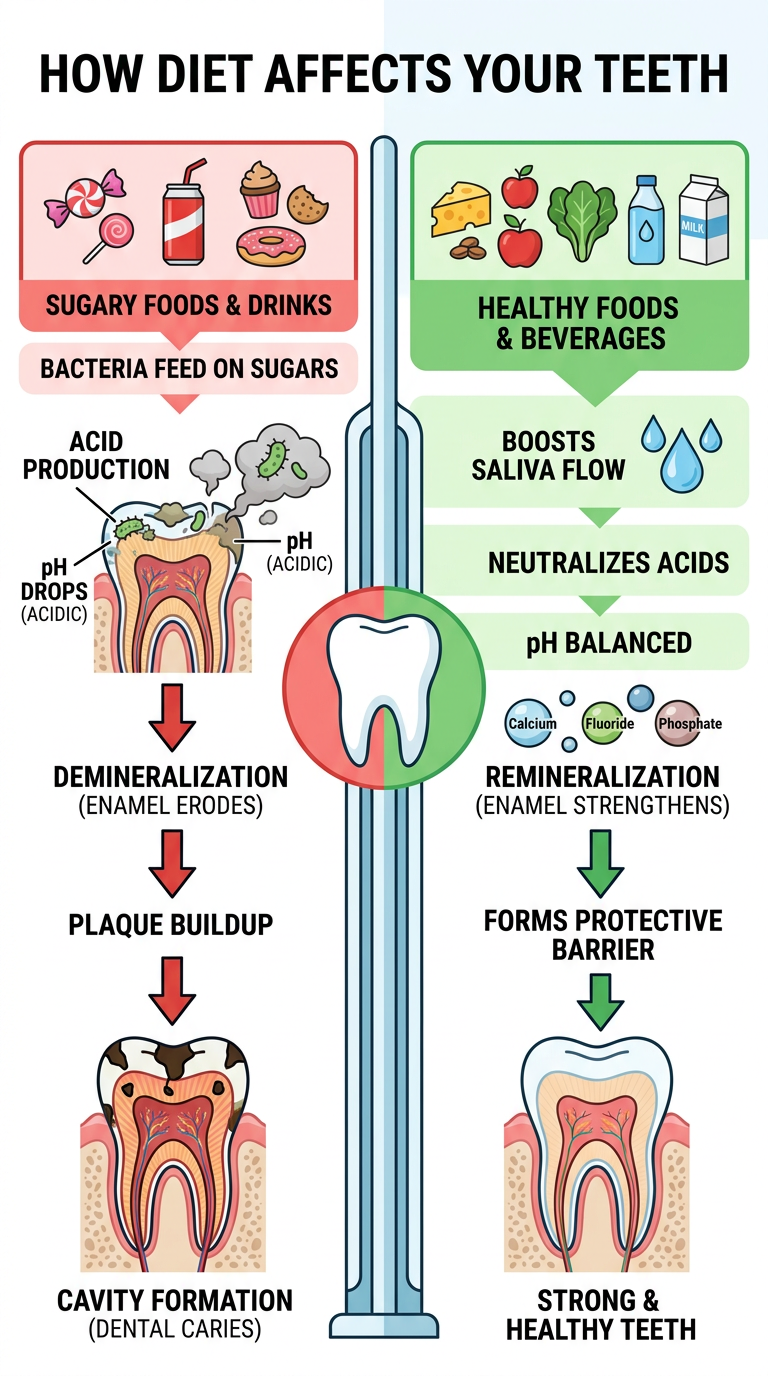
According to the World Health Organization (WHO), dental caries (tooth decay) is among the most widespread noncommunicable diseases globally — affecting over 2.5 billion people. The main culprit? “Free sugars” — the sugars added to foods and drinks (or present in syrups, honey, fruit juices). Your mouth bacteria feast on them, produce acid, and begin eroding enamel.
But it’s more than just sugar. Acidity plays a big role, too. Foods or drinks with low pH (acidic) can slowly dissolve enamel over time, even if they don’t have much sugar.
So — yes — diet matters. For better or worse.
Foods and Drinks That Harm Your Teeth
Let me start with the “villains.” During my college years I was practically living on cola, cheese puffs, and instant noodles — and my dentist warned me often. But I didn’t pay heed until one day, biting into an apple hurt more than it should have. That’s when it hit me: I was slowly eroding my teeth.
Sugar‑laden snacks and drinks: the obvious saboteurs
- Sodas, energy drinks, sweetened iced teas, sports drinks: These aren’t just sugary — they’re often acidic too. The combination is a double whammy for teeth.
- Sticky sweets, candies, dried fruits: Because they cling to teeth and don’t wash away quickly, they give bacteria more time to feast and produce enamel‑destroying acids.
- Refined carbs & white bread/pasta/crackers: As these break down, they convert to simple sugars in your mouth — effectively feeding the same decay‑causing bacteria.
There was a time I’d have a sandwich and chips mid‑afternoon, thinking I was “eating light.” In hindsight, not so light for my teeth.
Acidic drinks and foods: enamel’s silent enemy
Your enamel doesn’t just fear sugar. It hates acid. Drinks and foods with low pH slowly demineralize enamel, weakening its defenses.
- Fruit juices, citrus fruits (oranges, limes, grapefruits): These are acidic. Frequent sipping — especially between meals — means enamel doesn’t get time to recover.
- Carbonated or diet sodas (even “sugar‑free”): Because of carbonation and added acids (like phosphoric or citric acid), they can be as corrosive — sometimes even more — than sugary sodas.
- Frequent acidic snacking or sipping: Constant acid exposure prevents enamel from re‑mineralizing. Over time, enamel thins, dentin gets exposed, and sensitivity kicks in.
I still remember the cold‑water sensitivity I got one winter — never from cold drinks, but from brushing too soon after finishing a fizzy drink. Rusty experience, but a valuable lesson: timing matters.
Foods and Habits That Help Strengthen Your Teeth
Okay — so far I sound like a real killjoy. But it’s not all doom and gloom. There are foods that act like reinforcements for the fortress. I began paying attention to some of them after a chance conversation with a friend studying dentistry. Little habits that helped — and surprisingly, they made a difference.
Dairy, calcium, and enamel-strengthening foods
Foods rich in calcium and phosphate help support enamel (which is made of minerals like hydroxyapatite). Things like cheese, plain yogurt, even milk (or calcium‑fortified alternatives) give your teeth material to rebuild and stay strong.
Of all the changes I made, swapping sugary snacks with plain yogurt — and doing so more often — probably helped the most. My dentist noticed the enamel was less “chalky” than before (yes, that’s a term she used). Lesson learned: simple swaps can pay off.
Crisp, fibrous foods; water; good oral‑hygiene habits
- Crunchy vegetables and raw veggies: These act like a natural scrub for teeth as you chew, stimulating saliva and clearing food residues. Think of chewing celery like scrubbing your teeth with a soft brush — minus the bristles.
- Water (ideally plain, fluoridated if available): Drinking water after meals helps rinse away sugars and acids, giving enamel a chance to recover.
- Spacing out meals/snacks instead of constant nibbling: Frequent snacking or sipping means enamel never gets a break. Limit snacking, and give your saliva time to neutralize acid.
- Wait before brushing: Immediately brushing after acidic foods or drinks can spread the acid around, accelerating enamel wear. Better to wait ~30 minutes.
Case Study: My Late‑Night Snack Routine & What It Did to My Smile
Back in college (yes, the era of late‑night pizzas and energy drinks), I rarely thought about oral care. I’d grab whatever was convenient — often high‑sugar or high‑acid snacks — then head back to my laptop. Brushing once a day was as much as I did. If I’m being honest, I felt invincible. But here’s what happened within a year:
- I started getting chipped enamel on molars (visible when I opened wide and caught light in the mirror). Scary, but I ignored it.
- Then came sensitivity — cold drinks, cold air, even cold wind made my teeth ache. I figured I was “just getting older”.
- Finally, a check‑up revealed early enamel erosion and a few micro‑cavities. The dentist said I was lucky — I caught it early. With a little fluoride toothpaste, a better diet, and proper brushing/flossing, I could stop further damage.
That was a wake‑up call. Slowly, I phased out energy drinks, swapped chips for fresh fruit or nuts, increased water intake, and committed to brushing twice daily — but after meals, not immediately. Over time — months — the sensitivity reduced, and the enamel stopped worsening. Felt like patching tiny cracks in a wall before they turned into a breach.
Why It’s Not Just About What — but When and How You Eat
One of the biggest misconceptions is that if you just avoid candies and sodas, your teeth are safe. But it’s more nuanced:
- Frequency matters more than quantity: Sipping acidic drinks all day long is far worse than drinking a soda once with a meal.
- Method matters: Swishing a drink around before swallowing or holding it in your mouth increases enamel exposure to acid.
- Recovery matters: Give your saliva and minerals time to neutralize acids and re‑harden enamel. Water, good hygiene, and remineralizing foods help.
It’s a bit like playing Jenga: if you keep pulling out bricks (enamel) faster than you patch them, eventually your teeth wobble. But if you patch consistently — through good habits and smart choices — the tower stands firm.
Putting It All Together — A Simple, Realistic Diet & Oral Health Game Plan
If you asked me today, here’s the “light but effective” oral‑friendly diet I’d recommend. I’ve tried to keep it realistic — no extremes, no demonizing food — just smart balance.
- Limit sugary and acidic drinks/snacks: Keep sodas, energy drinks, and sticky sweets to a minimum. Reserve them for occasional treats, not daily snacks.
- Eat enamel‑friendly foods regularly: Include dairy (cheese, plain yogurt), crunchy fruits/vegetables, whole grains instead of refined carbs, and plenty of water.
- Time your brushing: After meals/drinks — especially acidic ones — wait ~30 minutes before brushing to give enamel a chance to recover.
- Drink water after meals or acidic drinks: Helps rinse away sugars and acids, reducing damage.
- Don’t snack continuously: Aim for clear meal times rather than grazing all day — fewer acid attacks, more recovery time.
- Regular check‑ups: Early detection of enamel wear or cavities makes a world of difference. Prevention beats repair anytime.
As part of an oral‑health lifestyle, I also like to refer to resources like Atlanta Dentistry for professional advice — because at some point, diet and brushing can only do so much. Sometimes you need expert eyes.
Final Thoughts: Is Eating Right Enough — or Do You Still Need a Dentist?
Yes — good diet and habits lay the foundation. But they’re only part of the equation. Even with the smartest diet, genetics, brushing habits, and random little events (like accidentally knocking a tooth) play a part. That’s why combining mindful eating with regular dental check‑ups is the best way to ensure your enamel keeps doing its job for decades.
So next time you sip that soda or snack on something sticky, you might pause for a second and ask yourself: “Is this brick helping build my fortress — or tearing it down?”
Because when it comes to teeth — prevention, consistency, and awareness matter more than perfection.
Further Reading: Why Enamel Matters
Learn more about the structure and function of enamel on this