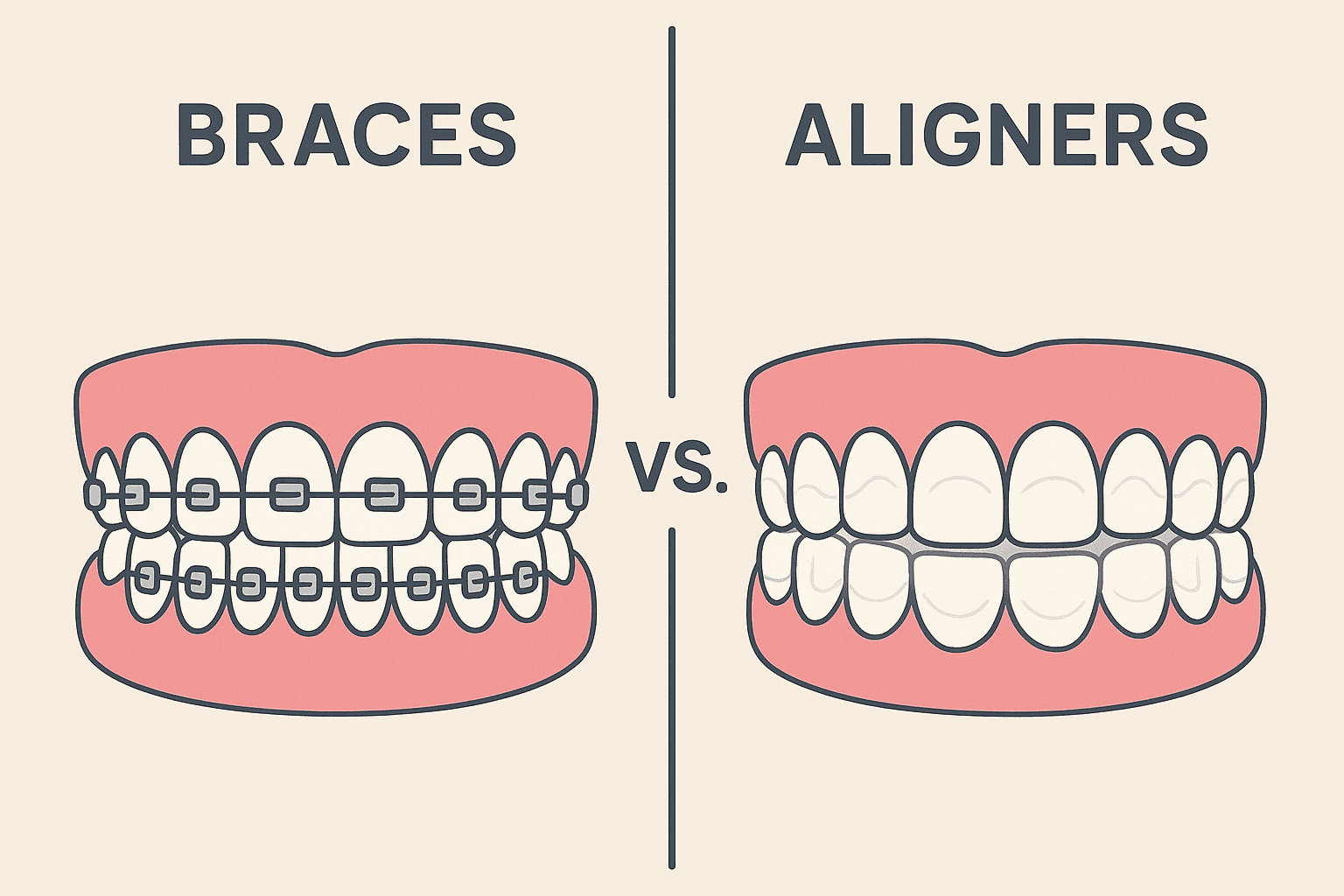
Braces vs. Aligners: Which One Is Better for You?
Ever stood in front of the mirror, poking at your teeth while thinking, “Hmm — should I go for metal braces or those sleek, almost‑invisible trays everyone seems to rave about”? If yes, you’re not alone. I’ve walked that tightrope myself — and learned more than a few surprising lessons along the way. Let me walk you through how I chose and why neither option is “perfect for everyone.”
The Premise: What Are We Talking About?
First off, what exactly are we comparing?
- Traditional Braces: brackets bonded to your teeth, connected by wires that get tightened over time, gradually shifting your teeth. Think old‑school orthodontics — but refined over decades. These have been the go-to for complex dental issues.
- Clear Aligners: removable transparent trays custom‑made (often via 3D scans), changed every 1–2 weeks, slowly nudging your teeth into place. Popular versions like Invisalign fall in this category.
Imagine braces like a permanent scaffolding attached to your teeth — always there, gradually doing the job. Aligners? More like a set of gentle masks that mold your teeth over time. Both can straighten teeth — but the user experience, commitment, and suitability often differ dramatically.
Real‑Life Drama: My (Almost) Story with Both
Okay, so here’s a confession (yes, slightly messy and human). I originally got metal braces in my late teens — mainly because my dentist recommended them for correcting a moderate crowding + a mild overbite. It took almost two years, and yes — there were those moments of soreness, dietary restrictions, and the occasional frustration of cleaning around wires. Still, the final result? Solid, dependable, and long‑lasting.
Fast-forward a decade: I considered clear aligners. The appeal was obvious — discreet, removable, and seemed “modern”. But after reading up, I realized aligners demand discipline: wearing them ~20–22 hours/day, careful cleaning, no snacking on a whim without proper cleanup. And if you skip wearing them enough? Your progress stalls. That felt risky for a “casual adult” with a busy schedule.
In short, aligners could’ve been great for minor tweaks. But for anything more complex or long-term stability? My earlier braces would still win. Lesson learned: there’s no one-size-fits-all “best.” Just what’s best for you at a particular time.
Side‑by‑Side: Pros & Cons (What Dentist Brochures Don’t Always Say)
✅ The Case for Aligners (When They Work Well)
- Discreetness & Aesthetics: Aligners are nearly invisible — great for adults, professionals, or anyone self-conscious about metal braces.
- Comfort & Soft Feel: Smooth plastic — no wires digging into cheeks or gums. Often much gentler than braces.
- Flexibility (Eat, Brush, Live): Since you can take them out, meals and oral hygiene are easier. No need to avoid sticky or hard foods “forever.”
- Fewer Office Visits: Typically, fewer adjustments compared to braces — less disruption, especially if you’re busy.
- Clean Look Before the Full Result: For someone who just wants a subtle alignment (slight crowding, spacing, mild bite correction), aligners often do the trick — and quickly.
⚠️ The Catch — What Aligners Might Not Do (Or What They Demand)
- User Discipline Required: Aligners need to be worn ~20–22 hours daily. Miss a few hours often, and treatment stalls.
- Limited for Complex Cases: Severe misalignments, big bite issues, jaw discrepancies — aligners may fail or give suboptimal results.
- Risk of Losing Them: Because they’re removable, people misplace trays or accidentally throw them away. That can be costly or disruptive.}
- Possible Relapse (Front Teeth): Some studies suggest higher rates of relapse (teeth shifting back) for certain cases when using aligners, especially on front‑teeth crowding.
- Cost & Replacement Trays: For complex or longer treatments, additional aligners may be needed — pushing cost and time up.
✅ The Case for Traditional Braces (When You Need Reliability)
- Effectiveness Across the Board: Whether mild crowding or complex bite/jaw issues, braces offer precise control. Orthodontists can tweak exact tooth movement.
- No Discipline Required: You wear them — period. No worrying about forgetting trays, or “maybe I’ll take them out this snack.” They do the job 24/7
- Durability & Low Risk of Loss: Brackets/wires stay put, you’re not likely to “lose” your braces mid‑treatment. Less anxiety there.
- Better for Complex Corrections: Misaligned bites, jaw issues, rotated teeth — braces often remain the default go-to.
⚠️ Downsides of Braces (Yes — There Are Some)
- Visible — No Matter What: Even with ceramic or colored bands, braces are noticeable. That may bother self‑conscious teens or adults.
- Oral Hygiene Becomes a Chore: Brushing and flossing around wires and brackets takes time — and missing spots can lead to plaque, cavities, or gum issues.
- Food Restrictions: Brace‑wearers often must skip sticky candies, crunchy nuts, and hard, crusty foods. Instant regret if you bite into something wrong.
- Discomfort, Maybe Even Pain: After adjustments, or during initial weeks — soreness, ulcers, mouth‑irritation, and sometimes speech adjustments.
So — Which One Should You Pick? (It Depends)
Here’s how I view it now (after thinking it over, reading up, and watching friends go through both): there are three “profiles” of people for whom each option tends to work best. Maybe you fall into one.
Consider Clear Aligners If You:
- Have a mild to moderate alignment issue (slight crowding, spacing, minor bite adjustments).
- Care a lot about aesthetics — maybe you’re in a professional setup, social circles, or don’t like “metal mouth.”
- Lead a busy life where frequent dental visits or maintenance (braces, cleaning, dental wax, food restrictions) feel like a burden.
- Are disciplined enough to wear trays for ~22 hours/day and maintain strict oral hygiene.
Lean Toward Braces If You:
- Have complex orthodontic issues — severe misalignment, bite problems, jaw discrepancies, and rotated teeth.
- Don’t want to risk treatment being compromised due to forgetfulness or non‑compliance.
- Prefer a “set and forget” solution rather than daily management.
- Want reliable, long‑term results and are okay with the aesthetic trade‑off (metal brackets, wires, maybe even colored bands).
Case Study: A Friend’s Journey & What I Learned
One close friend of mine — call her “M” — had mild crowding + a tiny gap between her front teeth. She chose aligners. Worked almost flawlessly for 14 months, and she loved how her smile appeared “normal” through the process. No food restrictions, easy brushing, minimal mouth irritation. She told me, “I felt like I never had braces — just a personal secret mission I was carrying every night.”
Then there was “J”, another friend. He had moderate crowding and a minor overbite. He picked traditional braces. Yes — he endured a few months of discomfort, careful brushing, and avoiding snacks like nuts, popcorn, or caramel. But at the end of ~22 months, his teeth were aligned, his bite corrected — and (he claims) much more stable than what he witnessed in friends who used aligners. No relapse in 5 years. His verdict? “Braces are a commitment — but the payoff’s worth it.”
So: two similar problems, two different journeys, two happy outcomes. That’s the reality — it’s not “best (braces) vs worst (aligners)”. It’s about “what fits your teeth, lifestyle, and discipline.”
Hidden Realities: What Dentists Don’t Always Emphasize
- Aligners Need Patience & Adult‑Style Discipline: It’s easy to underestimate what a 22-hour/day commitment means. Miss dinners, forget brushing — next morning the trays stay out longer. I personally know people who delayed their treatment simply because they skipped wearing after meals more than once. That’s a real risk with aligners.
- Braces Demand Oral Hygiene (Even If Fixed): Many forget that fixed braces create nooks where food, plaque, and bacteria can hide. Brushing once a day isn’t enough. If you slack, you might end up with superficial stains or even cavities. I’ve seen it firsthand — a friend got braces and in month three, had to deal with enamel discoloration due to poor brushing. Not fun.
- Complex Cases Often Rule Out Aligners: According to the review on clear aligners, they’re most reliable for mild–moderate front‑teeth crowding or spacing — less so for severe misalignments or jaw-related issues.
- Cost & Hidden Extras: Aligners may seem pricey initially — and if you lose a tray or need extra ones, cost and time go up. Braces may have fewer surprise costs (except maybe bracket breakage), but the hygiene tools, wax, and extra cleaning visits add up. Often, what seems “cheaper” at the start isn’t always the cheapest in the long run.
Final Verdict — My Take (Yes, I’m Biased a Bit)
Here’s the truth: if I were to straighten my teeth again — in my 30s, with a somewhat stable but busy life — I’d go for aligners. The discretion, flexibility, and ease of hygiene fit better with adult life. But — if I were younger, or had major jaw/teeth issues — I’d choose braces without a second thought. They’re tougher, less “glamorous”, but reliable.
And if you asked me whether aligners are “better” than braces, I don’t think one is categorically better. They are tools like using a hammer vs. a screwdriver. Each has its place. What matters is matching the right tool to your job. Trying to use a screwdriver to hammer in a nail — that’s when you get sore thumbs. Similarly, using aligners for severe misalignment is not wise.
If you want, you can think of braces as a “full‑body cast” for your teeth — unmovable, solid, and constantly working. Aligners? More like a series of gentle, personalized molds — flexible, subtle, but requiring cooperation.
So — question for you: what’s more important right now — instant smile confidence, or long‑term stability? Food for thought. 😊
Curious for professional guidance? You might check out resources on this dental site to see how many orthodontists outline treatment plans for braces vs aligners (how many trays, expected duration, cost, etc.).