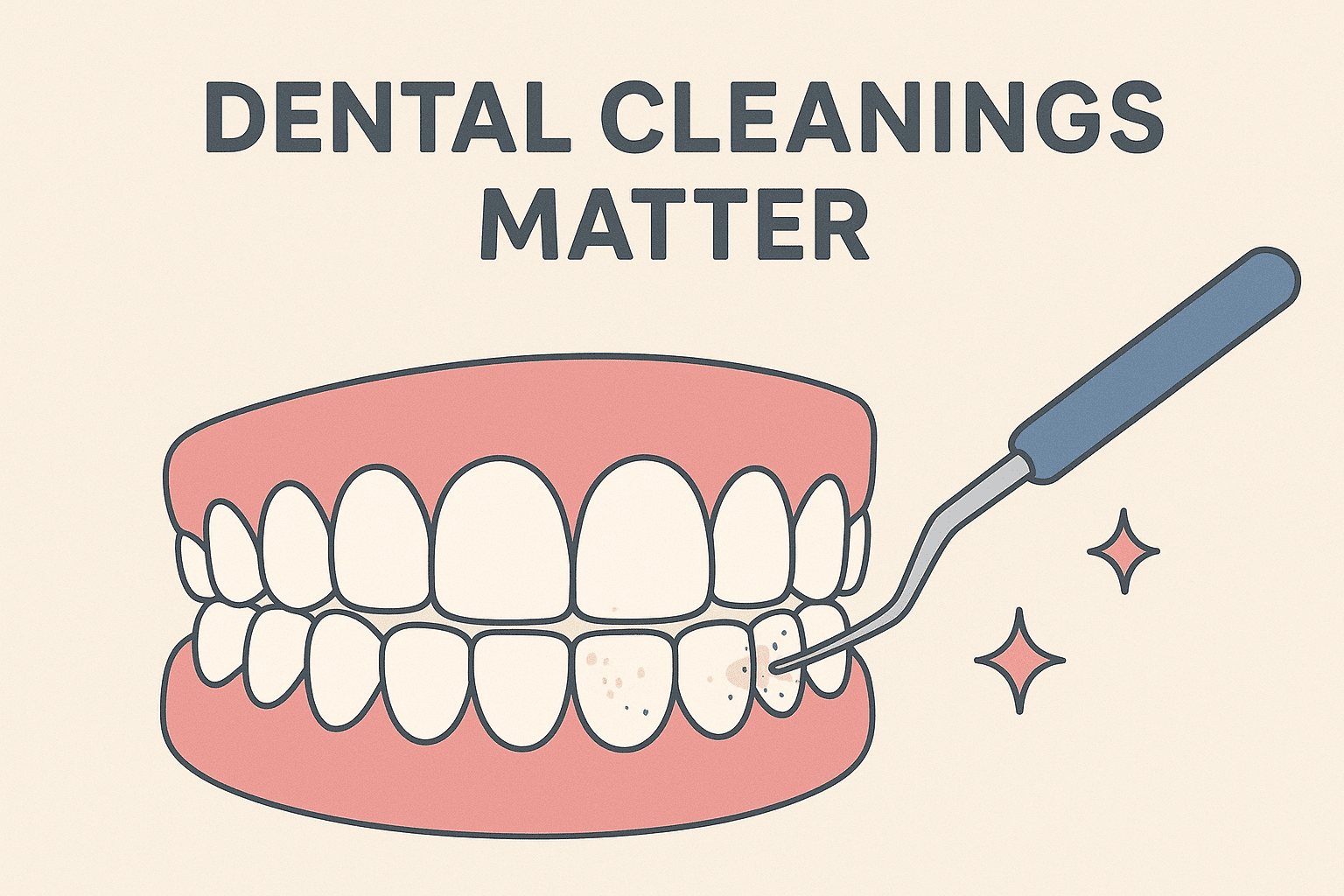
Why Dental Cleanings Matter More Than You Think
Why Dental Cleanings Matter You know, I used to skip my six‑month dental checkup for years — out of laziness, or “I’m too busy,” or “my teeth feel fine anyway.” But one day I realized that skipping cleanings is a bit like skipping oil changes for your car: you might save time in the short run, but eventually the engine’s going to give up (or in this case, your teeth). And I’m glad I learned that the hard way.
What Is a Dental Cleaning — And What It Actually Does
At first glance, a dental cleaning might sound trivial: “just scraping off stuff from your teeth,” right? But the reality is far more important. Professional teeth cleaning (sometimes called prophylaxis) involves more than just a quick brush and floss. During a cleaning, a dental hygienist or dentist removes both soft plaque and hard mineralized deposits (tartar/calculus) — including the stuff hiding between teeth and under the gum line. Learn more on Wikipedia.
Think of plaque like soft moss growing on the bricks of a house — regular brushing can remove a lot, but over time some of it hardens into cement (tartar). Only a skilled cleaner with proper tools can chip that cement off. If left unchecked, that “cement” can erode the structure itself: gums, roots, and bone support.
During a typical visit, you may get scaling and polishing, and even a quick oral‑health screening. This lets your dentist spot early signs of decay, gum inflammation, or other issues.
Why It’s More Than Just A Clean Smile
Prevent Cavities, Gum Disease, and Tooth Loss
Daily brushing and flossing are great — but they can’t catch everything. Bacteria accumulate in fissures, between teeth, under gums — places your toothbrush simply can’t reach. Over time, plaque hardens into tartar, which can irritate gums and lead to gingivitis, or worse, periodontitis.
From what I’ve seen — both in research and personally — cleanings are the difference between “I have healthy gums” and “Why are my gums bleeding when I brush now?” It’s preventive maintenance at its best.
Fresh Breath & A Brighter Smile (Confidence Matters)
Ever had that embarrassing moment when you realize you have morning breath before a big meeting, or your smile doesn’t feel as fresh as before? Professional cleaning removes bacteria, plaque deposits, tartar, and stains caused by coffee, tea, smoking, or colored foods. The result: fresher breath, cleaner teeth, and a brighter smile.
It’s not just cosmetic. Feeling confident about your smile can affect the way you interact — personally and professionally. I’ve found that after a cleaning, I’m more likely to smile, more likely to speak up, and less likely to cover my mouth when I laugh. It’s a small change — but over time, small changes matter.
Beyond the Mouth: Oral Health and Overall Health
You might think — “Hey, it’s just my teeth.” But actually, your mouth is the gateway to your body. Poor oral health isn’t just bad for your teeth — it’s been linked to broader health issues.
- Heart health & inflammation: Gum disease causes chronic inflammation. Bacteria from an infected mouth can enter the bloodstream, increasing risks for cardiovascular problems.
- Systemic infections & complications: Oral bacteria can contribute to respiratory issues, complications during pregnancy, and other health problems if left unchecked.
- Overall quality of life: A healthy mouth helps you eat, speak, and express yourself without pain or embarrassment.
In short, taking care of your mouth isn’t isolated. It’s part of a larger system. Cleaning your teeth regularly is like tuning a musical instrument: if you skip tuning, the small misnotes add up — and eventually the melody is off.
When Should You Go for a Dental Cleaning?
Traditionally, many dentists recommend a cleaning every six months.
But you know what I think? There’s no “one‑size‑fits‑all.” Depending on your oral health, habits, and risks, frequency should be personalized. For example:
- If you’re prone to cavities, gum sensitivity, or dry mouth (saliva helps neutralize acids and wash away bacteria — and when saliva is low, decay risk increases).
- If you smoke, drink coffee/tea often, or consume sugary or acidic foods, you might need more frequent cleanings to prevent stains, plaque buildup, or gum irritation.
- If you have a history of gum disease or are going through hormonal changes, pregnancy, or chronic illness, only your dentist can determine a safe schedule for you.
In fact, some dental professionals even argue that “once every six months” is just a baseline. Think of it as “spring cleaning” for your mouth — but some of us need a “spring + fall” schedule, depending on lifestyle. I’ve personally bumped up my visits to three times a year during periods of heavy coffee intake and stress (both seemed to worsen gum sensitivity). Less plaque, less worry.
What Happens If You Skip Cleanings — A Mini Case Study
Let me tell you about a friend — call him “R.” R brushed regularly, flossed sometimes, swore he ate clean. But he avoided professional cleanings for years. Gradually, he noticed occasional sensitivity in his molars and slight bleeding when brushing. “It’s just gums,” he shrugged. Fast forward two years — by the time he saw a dentist, he had early signs of gum recession and two cavities forming beneath old fillings that he didn’t even know existed. The treatment costs more than what two years of cleanings would’ve cost. (Not to mention the discomfort and the nagging anxiety about possible tooth loss.)
That was a wake‑up call — for both of us. Prevention always feels optional until it’s not. And I tell that story because it’s easy to ignore tiny warnings — bleeding gums, slightly rough feeling near the gum line, minor sensitivity. Because life’s busy, work, travel, deadlines. But small neglect compounds. That’s why dental cleanings matter more than we usually think.
Beyond Cleaning — What You Should Combine It With
Getting a professional cleaning is huge — but it’s not magic. It works best when combined with daily hygiene habits and smart lifestyle choices. For instance:
- Consistent brushing & flossing: Use a soft‑bristle brush, fluoride toothpaste, floss, or interdental cleaners. Brushing alone misses ~50% of plaque between teeth.
- Oral irrigators or water flossers: For people with braces, crowded teeth, or dental implants — these tools help flush food debris and bacteria from hard‑to‑reach places.
- Mindful diet & hydration: Limit sugary or acidic foods/drinks, drink plenty of water, avoid excessive staining items (coffee, tea, tobacco).
- Regular check‑ups & personalized care: Use your cleaning visits to discuss gum health, risk factors, or any sensitivity issues with your dentist.
For me, switching to a water flosser and cutting down late‑night sugary snacks made a surprisingly big difference. My gums stopped bleeding, sensitivity dropped, and I didn’t dread cleanings like I used to. It felt like giving my mouth a fresh start every few months.
Why So Many People Underestimate Dental Cleanings
It’s human nature to ignore preventive maintenance. We focus on visible problems — a cavity, pain, or obvious discoloration. But invisible buildup? Slow gum recession? That doesn’t hurt — at least not immediately. So we delay. “I’ll go next month.” Then next month becomes six months, becomes a year. And problems sneak up on us.
Plus — cleanings aren’t glamorous. They involve scraping, polishing, and sometimes mild sensitivity. That “gritty paste” polishing phase? Not fun. But ironically, that’s precisely why they’re effective. It’s like pressure‑washing a sidewalk: unpleasant for five minutes — but you don’t see the grime being removed until it’s gone. And when the surface is clean, it’s easier to keep it that way.
Also, many of us think brushing and flossing at home is “enough.” But even with perfect home care, plaque can calcify into tartar — especially in hard‑to‑reach spots. Only a professional cleaning can remove that.
Final Thoughts — Your Mouth Deserves Regular Check‑Ins
So, does this all sound like overkill? Maybe. But think of it this way: you get your car serviced, your computer updated, your body checked regularly — why not your mouth? Teeth cleaning isn’t a luxury. It’s preventive care. It’s long‑term thinking.
For those who brush twice daily, floss diligently, and avoid heavy-staining foods, professional cleanings are still worth it. Because plaque doesn’t care how good you think you are at brushing. Because tartar doesn’t care whether you floss. It’ll harden, accumulate, irritate gums, damage enamel, invite bacteria, and eventually force you into expensive and invasive treatments — unless removed early. That was my lesson learned the hard way.
So book that cleaning. And next time you see your dentist or hygienist, think of it as more than a chore — think of it as an investment. An investment in a healthier smile, better overall health, and peace of mind. Because your teeth — and your health — deserve it.
Want to know more about simple oral‑hygiene habits, or when to schedule your next check‑up? Check out the resources and advice on this site — sometimes, a friendly reminder is all we need to act.